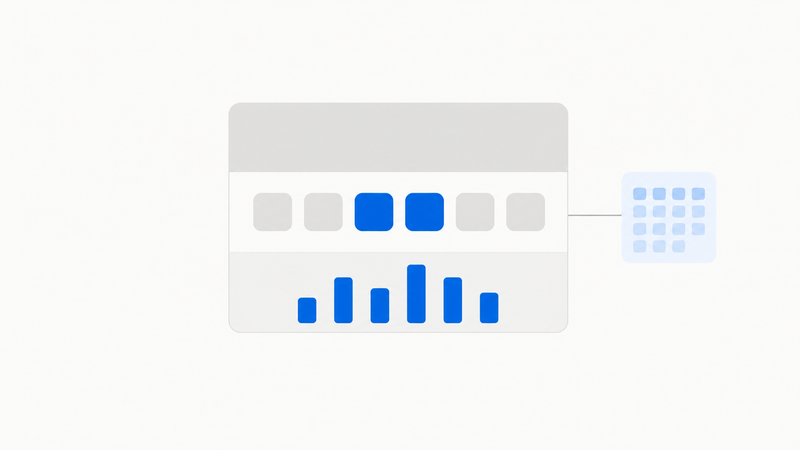
Consolidated billing: one invoice for several contracts and sites
Consolidated billing puts several contracts, sites or meters on one invoice. How to align billing dates, a worked example, and GST and sales tax limits.

Supreet Gupta, Co-founder
· 8 min read
On this page
- What does consolidated billing mean in B2B?
- Consolidated bill vs consolidated invoice: what's the difference?
- When do B2B companies use consolidated invoicing?
- How do you align billing dates on one invoice?
- Worked example: three contracts on one invoice
- What are the tax and entity limits on a consolidated invoice?
- One legal seller per invoice
- India: one invoice per GST registration
- US: sales tax follows where the service is received
- When should you not consolidate invoices?
- How to set up consolidated billing
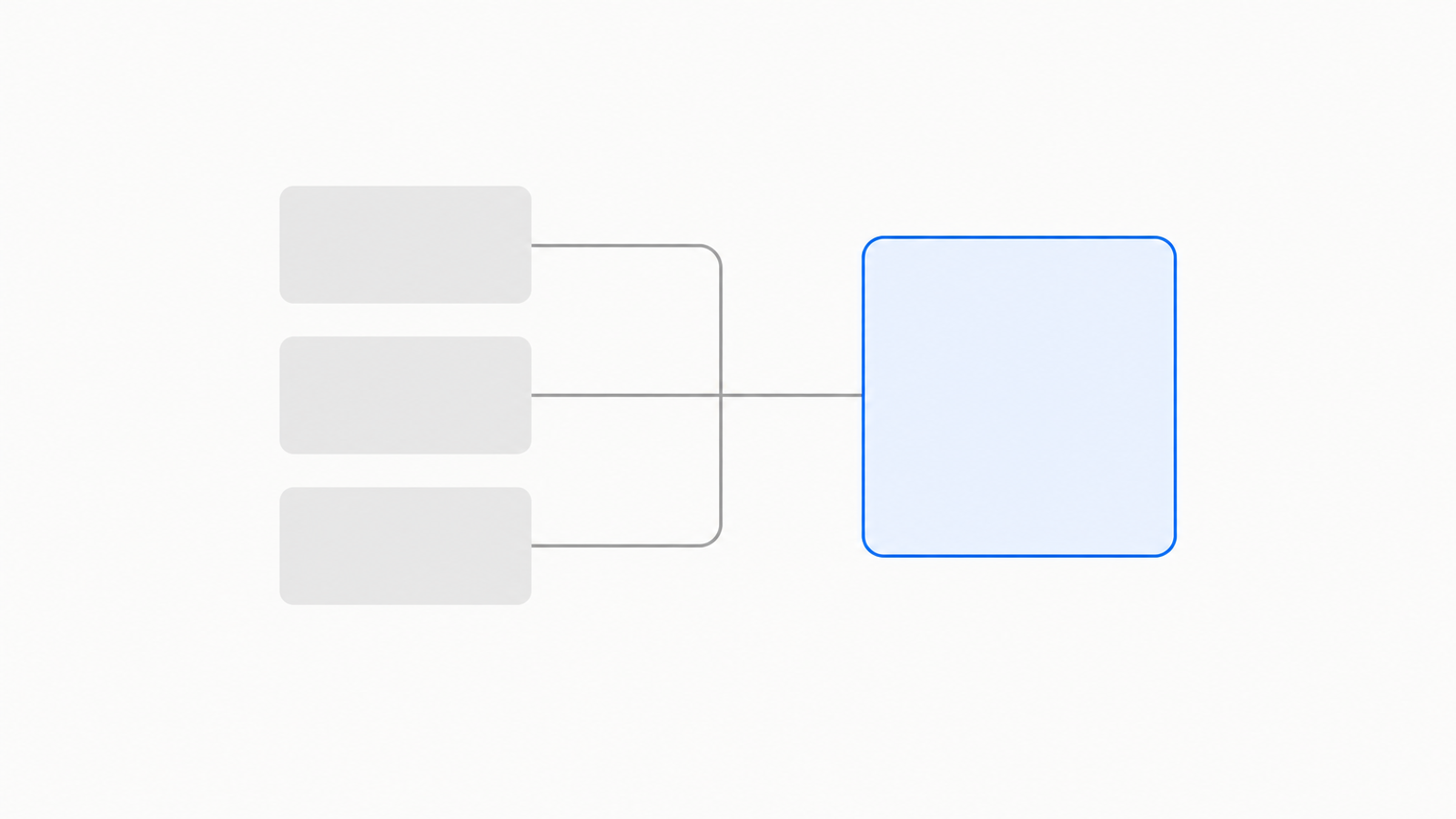
Consolidated billing is sending one customer a single invoice that combines the charges from several of its subscriptions, contracts, sites, subsidiaries or usage meters for the same period, instead of a separate invoice for each. Every charge keeps its own line, and the customer's accounts payable team approves and pays one document.
The phrase has a second meaning in US healthcare. According to the Centers for Medicare & Medicaid Services' 2026 SNF Consolidated Billing page, most services in a covered skilled nursing facility stay "had to be billed by the SNF to the Part A MAC in a consolidated bill." That's a Medicare claims rule. This post is about B2B invoicing.
What does consolidated billing mean in B2B?
In B2B, consolidated billing means one bill-to party gets one invoice per billing period for everything it buys from you, rather than one invoice per contract or product. The lines stay separate, so the customer can still code each amount to the right subscription, site or meter. It's one of the set-up choices in SaaS billing, next to billing frequency and billing in advance or in arrears.
Cloud providers use the same idea. According to AWS's consolidated billing documentation, an organisation gets "one bill for multiple accounts in the same SOR", where SOR means seller of record, and "one bill per SOR" when its accounts sit with more than one. That second clause is the same entity limit that applies to your own invoices.
Consolidated bill vs consolidated invoice: what's the difference?
A consolidated invoice is one invoice, with one number and one tax calculation, carrying lines from several subscriptions or contracts. "Consolidated bill" is often used loosely for a statement that sums up several separate invoices into one amount to pay, where the invoices keep their own numbers and tax. Ask the customer which of the two they mean, because their AP team treats them differently.
| Consolidated invoice | Consolidated statement | |
|---|---|---|
| Documents | One invoice, one number | Several invoices plus a summary |
| Tax | Calculated on the one invoice | Stays on each underlying invoice |
| Customer approval | One document | The invoices one by one, then one payment |
| A disputed charge | Holds up the whole invoice | Holds up only its own invoice |
| Corrections | A credit note against the one invoice | A credit note against the invoice concerned |
| Fits best | One legal entity buying several products | Several entities or purchase orders paid centrally |
A statement is the safer choice when the charges can't legally sit on one invoice, which the tax section below covers.
When do B2B companies use consolidated invoicing?
B2B companies use consolidated invoicing when one customer would otherwise get several invoices from them in the same month. The request usually comes from the customer's AP team, because one invoice means one approval and one payment. These are the common cases:
- Several contracts or products for one customer, such as a platform subscription, an add-on bought six months later and a support plan, each on its own order form.
- A parent and its subsidiaries, where the group's head office pays for subsidiaries that each use the product.
- Multiple usage meters, such as API calls and stored gigabytes, each counted on its own meter.
- Several sites or cost centres that want their usage shown separately but paid together.
You gain from it too. Fewer invoices means fewer due dates to chase, and one deposit to match instead of three. That matters when a customer sends one transfer for several invoices without saying which, a case the bank reconciliation matching guide covers.
How do you align billing dates on one invoice?
To put several contracts on one invoice, they need the same billing day and the same period. There are two ways to get there: co-terming, where an add-on is set to end and renew on the main contract's dates, and proration to a common billing day, where the first short period is charged as a stub so later invoices line up.
The stub is priced with a day-based formula:
Stub charge = monthly price × days in the stub ÷ days in that month
- Monthly price is the add-on's agreed price for a full month.
- Days in the stub counts from the add-on's start date to the day before the common billing day, including the start date.
- Days in that month is the number of days in the calendar month the stub falls in.
Co-terming also changes the add-on's term. An add-on signed partway through a 12-month contract runs only until the main contract's end date, so its first-term value is prorated too, and both renew on the same day. The stub period entry has the definition.
In Sonic, the Billing engine builds each schedule from the signed contract terms and prorates mid-month changes, so a stub like the one below is worked out by the schedule rather than in a side spreadsheet.
Worked example: three contracts on one invoice
Example: Lattice API, an invented API company, sells to Alderpoint, an invented logistics software group, under three agreements:
- Platform subscription since 1 January: $3,000 a month in advance, invoiced on the 1st.
- Analytics add-on signed on 10 March: $900 a month in advance. On its own it would be invoiced on the 10th.
- API usage: $0.001 a call in arrears, read from the usage meter at month end.
Left alone, Alderpoint gets three invoices a month on two dates. To consolidate, Lattice API moves the add-on to the 1st and co-terms it with the platform subscription, which renews on 1 January. The add-on's stub runs from 10 to 31 March, which is 22 days of a 31-day month: $900 × 22 ÷ 31 = $638.71. The contract lets the stub ride on the next consolidated invoice instead of going out alone on 10 March.
Alderpoint made 2,150,000 API calls in March. The invoice dated 1 April reads:
| Line | Period | Calculation | Amount |
|---|---|---|---|
| Platform subscription | 1 to 30 April | Flat | $3,000.00 |
| Analytics add-on | 1 to 30 April | Flat | $900.00 |
| Analytics add-on, first period | 10 to 31 March | $900 × 22 ÷ 31 | $638.71 |
| API usage | 1 to 31 March | 2,150,000 × $0.001 | $2,150.00 |
| Total before tax | $6,688.71 |
From May the invoice has three lines: $3,000, $900 and the previous month's usage. Co-terming also fixes the add-on's first-term value at the stub plus nine full months to 31 December: $638.71 + 9 × $900 = $8,738.71. Alderpoint's AP team now approves one invoice a month instead of three, and Lattice API matches one deposit.
What are the tax and entity limits on a consolidated invoice?
A consolidated invoice can only combine charges that share one seller, one buyer tax registration, one currency and one set of payment terms. In practice, one invoice can't usually span two of your legal entities, and in India it can't span two of the customer's GST registrations. In the US, one invoice can cover several sites, but each line may need the sales tax of the place where the service is received.
One legal seller per invoice
When your company sells through two legal entities, say an Indian private limited company and a US subsidiary, each entity issues its own invoices for its own contracts. It's the same rule AWS applies with one bill per seller of record. A customer who wants a single document can get a statement covering both, while the invoices underneath stay separate.
India: one invoice per GST registration
GST registration is by state, and the law treats each registration as a separate taxpayer. According to section 25(4) of the CGST Act, 2017, as published by CBIC, a person with more than one registration "shall, in respect of each such registration, be treated as distinct persons". Rule 46 of the CGST Rules then requires a tax invoice to show the supplier's GSTIN, the recipient's GSTIN if it's registered and, for an inter-state supply, the place of supply.
So suppose Alderpoint's Indian company has GSTINs in Karnataka and Maharashtra, and Lattice API's Indian entity is registered in Karnataka. Seats worth ₹4,20,000 used by the Bengaluru team go on an invoice to the Karnataka GSTIN, as an intra-state supply with CGST and SGST. Seats worth ₹1,80,000 used by the Pune team go on a second invoice to the Maharashtra GSTIN, as an inter-state supply with IGST. Both invoices can go to one AP inbox and be paid in one transfer, but they stay two invoices.
GST law does use the phrase "consolidated tax invoice", in a narrower sense. According to Rule 54(2) of the CGST Rules, an insurer, banking company or financial institution, including a non-banking financial company, may issue a consolidated tax invoice "for the supply of services made during a month at the end of the month". For a SaaS or API business, consolidation is a commercial choice made inside the normal invoice rules.
US: sales tax follows where the service is received
US sales tax is set state by state, and many states charge it based on where the buyer receives the product. According to the Washington Department of Revenue's guide to determining the location of a sale, sellers should "code the sales tax to the location where the customer receives the product, digital good, service, or warranty."
A consolidated invoice to a customer with teams in Seattle and in Portland, Oregon may therefore carry Washington tax on one line and none on the other, since Oregon has no general sales tax. Keep the site on each line so the tax can follow it.
This is general information. Confirm the treatment for your business with your auditor or tax adviser.
When should you not consolidate invoices?
Don't consolidate when different people approve or pay parts of the bill, or when one part is often disputed. A consolidated invoice gets paid only when every line on it is accepted, so one contested charge can hold up everything else. Keep invoices separate in these cases:
- Subsidiaries pay from their own budgets, or each needs its own purchase order number on the invoice.
- One line is often disputed, such as usage, and a dispute would delay fixed fees nobody questions.
- The contracts have different payment terms, such as net 15 and net 45, so one due date would break one of them.
- The charges sit with different legal sellers, currencies or GST registrations.
- You report collections by contract, and a combined invoice would hide which contract is overdue.
There's a middle path: consolidate per paying entity, not per group. Alderpoint's head office gets one invoice for what it buys, and each subsidiary that pays its own bills gets one for its own.
How to set up consolidated billing
Setting up consolidated billing takes seven steps, and most of the work is agreeing the details with the customer before the first combined invoice:
- Name the bill-to party. Decide which of the customer's legal entities receives and pays the invoice.
- List what goes on it. Every contract, product and meter for that bill-to party, with its terms and current billing day.
- Pick one billing day. Usually the main contract's. Prorate or co-term the others to it.
- Choose how lines group. By contract, by site or by cost centre, matching how the customer's AP team codes invoices.
- Check the tax and entity splits. One seller, one currency, one GSTIN per invoice in India, and the site on each line in the US.
- Agree it in writing. Confirm the purchase order number, the AP contact, the date of the first combined invoice and who to call about a disputed line.
- Check the first cycle. Before it goes out, compare the consolidated total with what the separate invoices would have added up to.
Written by
Supreet Gupta
Co-founder, Sonic AI · LinkedIn
Supreet is a Cofounder at Sonic AI. Before starting Sonic, Supreet was a Product Manager at SaaS Labs (Sequoia funded Series B startup) where he worked with enterprises in US and Europe to deliver communication solutions. He completed his bachelors from IIT Bombay.